When Fun Becomes Expensive: How Casino Pleasure Engineering Quietly Inflates Your Losses
You walked in with a firm budget. Maybe $80, maybe $150 — a number you felt good about. Two hours later, you've burned through twice that, and the weird part? You don't feel robbed. You feel like you had a great time.
That's not a coincidence. That's a business model.
Casinos — both brick-and-mortar and their increasingly polished online counterparts — have spent decades studying what makes people spend more than they planned. And the answer isn't deception in the traditional sense. It's pleasure. Pure, carefully engineered, neuroscience-backed pleasure that quietly dismantles your financial judgment while you're busy enjoying yourself.
Your Brain on a Good Time
Here's the basic biology: when you're having fun, your brain releases dopamine. This neurotransmitter is the engine behind motivation, reward, and — critically — risk assessment. Under normal circumstances, dopamine helps you weigh consequences. But flood the system with enough of it, and the risk-evaluation part of the equation starts to blur.
Researchers have long documented what's sometimes called the "hot state" effect — the tendency for people in emotionally elevated states to make decisions they'd never make when calm and clear-headed. Casinos don't need to read the academic literature. They've been running that experiment on customers for decades.
The setup is simple: make the environment feel indulgent enough that your emotional temperature rises before you've placed a single bet. By the time you're sitting down to play, you're already operating in a compromised decision-making state. The house didn't cheat. The house just made sure you were in a good mood.
The Luxury Lever
Premium aesthetics do more than look nice — they change how you value money. This is something behavioral economists call "mental accounting," and casinos exploit it brilliantly.
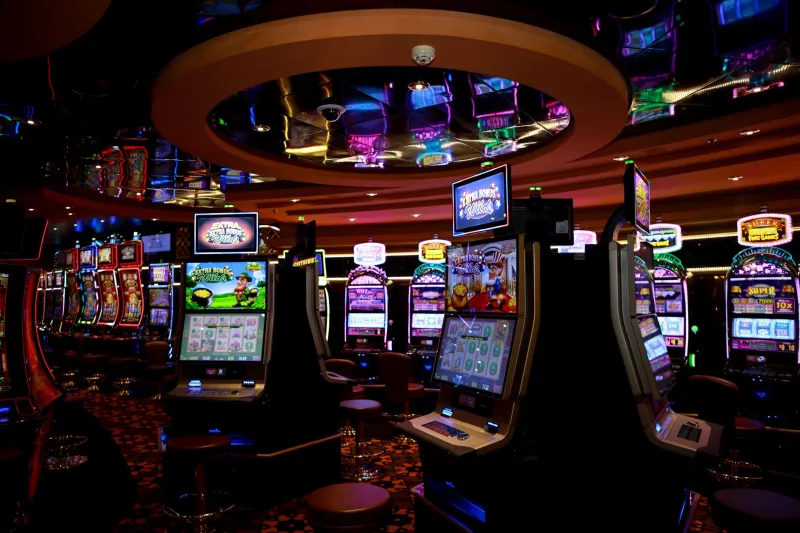
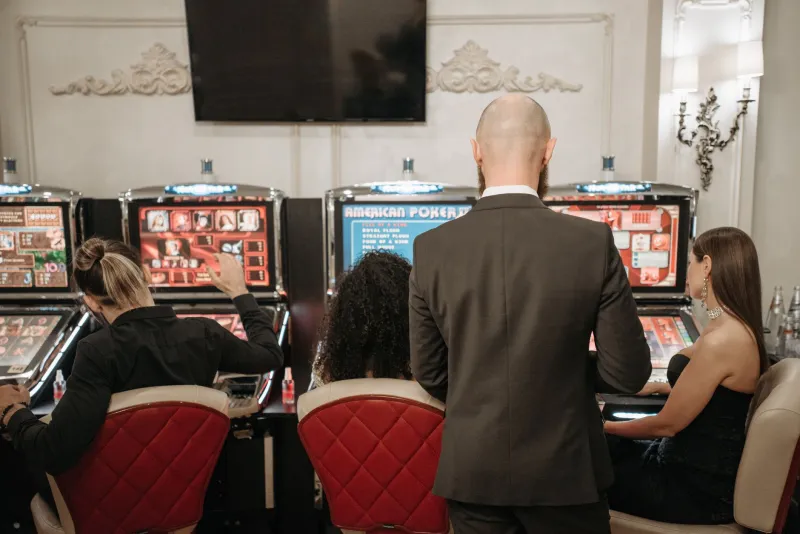
When you're sitting in a plush chair, sipping a craft cocktail, surrounded by warm lighting and attentive service, your brain recategorizes the experience. You're not gambling anymore — you're treating yourself. And when you're in treat-yourself mode, the internal spreadsheet you normally keep gets quietly closed.
Think about how this plays out at a high-end steakhouse. You'd balk at spending $18 on a burger at a fast food joint, but that same $18 tacked onto a $95 dinner tab barely registers. The environment reframes the math. Casinos use identical psychology. A $25 bet feels different — smaller — when you're sitting in a leather booth with a personalized cocktail menu than it does when you're at a fluorescent-lit machine in a roadside gaming hall.
Online casinos have caught up fast. Premium design, smooth animations, ambient sound design, and VIP-tier aesthetics all serve the same function: elevate the perceived experience so that individual wagers feel proportionally smaller.
Personalization Is the New Pit Boss
One of the most effective tools in the modern casino arsenal is personalization. When a platform remembers your name, greets you with a tailored bonus, or recommends games based on your history, something subtle happens: you feel seen. Valued. Like a guest rather than a customer.
That feeling matters more than most people realize. Research on consumer behavior consistently shows that people spend more with brands and services they feel a personal connection to. It's why your neighborhood bar gets more of your money than the chain down the street. Familiarity lowers your guard.
In a casino context, that lowered guard translates directly into larger bets and longer sessions. You're not just chasing a win anymore — you're enjoying a relationship. And we all know how much relationships cost.
The Entertainment Justification Loop
Here's where the dopamine discount really kicks in: once you've decided you're having fun, losing money becomes easier to rationalize.
This is the justification loop. It goes something like this:
- The environment is enjoyable.
- You're clearly having a good time.
- Entertainment costs money.
- Therefore, losing money is the price of entertainment — and that's fine.
This internal logic isn't irrational on its face. Entertainment does cost money. Concert tickets, streaming subscriptions, dinner out — none of that is free. The problem is that the casino experience is specifically designed to activate this reasoning while simultaneously presenting the possibility of a financial return. You're paying for entertainment AND you might win. It's a psychological two-for-one that makes the spending feel doubly justified.
The result? Players routinely exceed their original budgets and feel okay about it. The fun was worth it. The experience was worth it. The $200 session that was supposed to be $75 — totally worth it.
Until it isn't.
Protecting Your Bankroll When You're Having a Blast
None of this means you can't enjoy a premium gaming experience. It means you need to go in with your eyes open and your budget locked down before the good vibes kick in. Here's how to do that:
Set your loss limit before you start — not during. Once the dopamine is flowing, you're negotiating against yourself with a stacked deck. Decide your number when you're calm, write it down if you have to, and treat it like a non-negotiable.
Use a separate gaming fund. Don't play out of your main bank account or a wallet stuffed with cash. Load a dedicated prepaid card or use a separate e-wallet with only your budgeted amount. When it's gone, it's gone — no mental accounting tricks possible.
Check in every 30 minutes. Set a phone timer. When it goes off, pause and look at your actual balance versus where you started. The warm glow of a fun session makes it easy to lose track. Cold numbers don't lie.
Notice when you're rationalizing. The moment you catch yourself thinking "well, I'm having such a good time, a little more won't hurt" — that's the dopamine talking. Recognize it for what it is: a biological signal that's been deliberately triggered, not genuine financial reasoning.
Separate entertainment from gambling in your budget. If you want to treat casino gaming as entertainment spending, great — but budget for it the same way you'd budget for a night out. Don't let the "entertainment" framing become a backdoor to overspending.
The Bottom Line
Casinos are extraordinarily good at making you feel like the money you're spending doesn't quite count. That's the dopamine discount in action — the gap between what you planned to spend and what you actually spent, smoothed over by a genuinely enjoyable experience.
At Cocoa Casino, we're all for enjoying the game. The thrill of a big spin, the satisfaction of a well-played hand, the sheer fun of a beautifully designed slot — these are real pleasures worth appreciating. But appreciating them doesn't mean surrendering your financial judgment to them.
Know the mechanism. Set the limits. Then go have a great time — on your terms.