You're Not Due for Anything: The Brutal Math Behind Losing Streaks and False Hope

Let's set the scene. You're sitting at a slot machine — or maybe a roulette wheel — and you've lost seven times in a row. Something starts whispering in the back of your mind: It has to hit soon. I'm due. That feeling is so convincing, so deeply human, that even people who know better fall for it. And casinos? They're counting on it.
This is the gambler's fallacy in action, and it's quietly one of the most financially destructive thought patterns in gaming. Understanding it won't make you invincible, but it might just keep a bad session from turning into a catastrophic one.
What the Gambler's Fallacy Actually Is
The gambler's fallacy is the mistaken belief that past random events influence future ones. If a coin lands heads five times in a row, your gut screams that tails is overdue. But the coin doesn't have a memory. Neither does a slot machine's random number generator. Neither does a roulette ball.
Each spin, each flip, each card draw is what statisticians call an independent event. The outcome has zero relationship to what came before it. A roulette wheel doesn't "owe" you red after black has come up eight consecutive times. The probability resets completely with every single round.
Yet this bias is so powerful that it has a name, a century of documented research behind it, and a permanent home in every casino on the planet — because casinos don't need to manufacture it. Your own brain does the work for them.
Why Casinos Are Perfectly Happy You Feel This Way
Here's the uncomfortable truth: a player who believes they're "on the verge" of a win is a player who keeps spending. That's it. That's the whole business model hiding inside this one cognitive quirk.
Casinos don't actively lie to you about probability. They don't have to. The environment does the persuading. Loyalty to a particular machine after a dry spell, the instinct to "ride it out" at a cold table, doubling down on a losing streak because the tide has to turn — these behaviors keep the revenue flowing without a single misleading word from the house.
Think about how slot machines display recent outcomes, or how some roulette tables post the last 20 results on a digital board. That board isn't there to help you make smarter bets. It's there to feed your pattern-seeking brain exactly what it needs to convince itself a pattern exists.
The Near-Miss Effect Makes It Worse
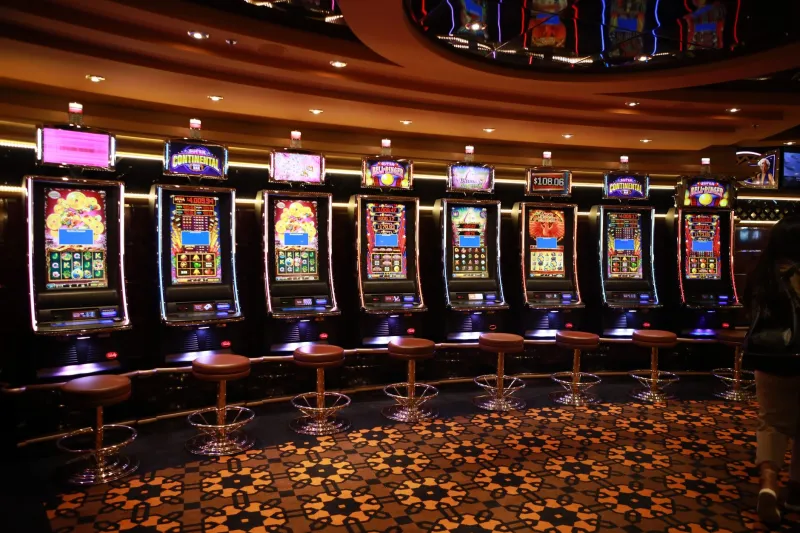
Layered on top of the gambler's fallacy is something even sneakier: near-miss psychology. You spin the reels and land two jackpot symbols with the third just above or below the payline. Your brain registers this almost identically to an actual win. Dopamine spikes. Excitement flares. And crucially, you interpret it as evidence that the jackpot is close.
It isn't. Slot machines are programmed so that near-misses appear more frequently than pure chance would produce them. The third jackpot symbol sitting one position off the line isn't a sign you're getting warm. It's a deliberate design feature engineered to mimic the emotional sensation of almost winning — because that feeling is what keeps people feeding machines.
Researchers have documented this effect extensively. Players who experience near-misses consistently report stronger urges to keep playing than players who experience outright losses. The near-miss is, in a very real sense, more dangerous than losing cleanly.
Real Costs, Real People
Talk to enough gamblers and you'll hear variations of the same story. A player in Vegas who sat at a video poker machine for four hours because it "hadn't paid out in a while and had to be ready." Someone at an Atlantic City blackjack table who kept doubling their bet after each loss because the math — their math, not actual math — told them a win was imminent. A slots player in an online casino who blew through three reloads convinced that the bonus round was one more spin away.
These aren't stories about weak-willed people. They're stories about perfectly normal human beings whose brains were doing exactly what evolution built them to do: find patterns and act on them. In the wild, pattern recognition kept us alive. At a casino, it empties your wallet.
The amounts lost while chasing a "due" win aren't always dramatic in a single session. Sometimes it's an extra $40 here, an extra $60 there. Over months and years, though, those amounts compound into numbers that genuinely hurt.
How to Actually Push Back Against This Thinking
Knowing about the gambler's fallacy is a good start, but knowledge alone doesn't flip a switch in your brain. Here are some concrete tactics that help:
Set a hard stop before you start. Decide in advance how much you're willing to lose in a session, and make that number non-negotiable. When you hit it, you leave — regardless of how "close" a win feels. This removes the decision from the heat of the moment, where your brain is least equipped to think clearly.
Say it out loud (or in your head). When you catch yourself thinking "I'm due," literally counter it with the statistical reality: "The machine doesn't know I've been losing. This spin has the exact same odds as the first one." It sounds almost silly, but verbalizing the correction interrupts the automatic thought loop.
Track your sessions honestly. Keeping a simple record of wins and losses — even just a note on your phone — forces a clearer picture of your actual results over time. The gambler's fallacy thrives in the fog of selective memory. Hard numbers cut through it.
Treat each session as its own complete story. Don't carry the emotional narrative of a losing session into a new one. "I lost last time so I'm due" is just as flawed as "I won last time so I'm on a hot streak." Both are stories your brain invented. Neither is information the game cares about.
Use loss limits at online casinos. Most reputable US-facing online casinos now offer built-in responsible gaming tools — deposit limits, session timers, cooling-off periods. These aren't just for people with serious problems. They're useful guardrails for any player who wants to stay in control.
The House Edge Doesn't Take Days Off
Here's the frame that tends to stick: the house edge is a percentage that operates across every single spin, hand, or roll — not across a streak. A slot with a 6% house edge doesn't "owe" you a recovery after a bad run. It takes its 6% from every outcome, independently, forever.
That's not cynicism. That's just the math. And once you genuinely internalize it, the feeling of being "due" starts to lose its grip. Not completely — you're still human — but enough to make better decisions when it counts.
Gaming is supposed to be entertainment. At Cocoa Casino, we're always going to be straight with you: understanding the mechanics behind your own thinking is one of the few edges a player actually has. Use it.