Luck vs. Skill at the Casino: A Game-by-Game Breakdown of Where Strategy Actually Matters
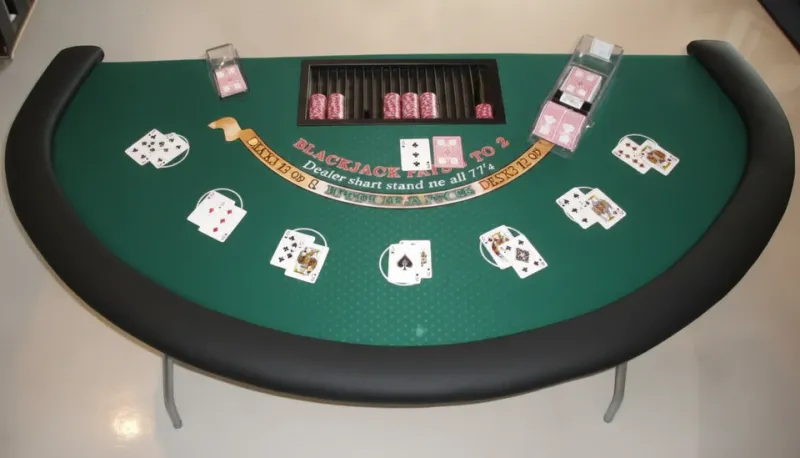
Photo: Binbin245, CC0, via Wikimedia Commons
Walk into any casino — or open any online platform — and you'll find two very different types of games sharing the same floor. On one side: games where no amount of preparation changes your long-run odds. On the other: games where the right knowledge genuinely shifts the numbers in your favor.
Knowing which is which isn't just trivia. It's the difference between playing smart and playing blind. Here's Cocoa Casino's honest, game-by-game breakdown of where skill moves the needle and where it simply doesn't.
Why the Distinction Matters
Casinos profit from a mathematical edge built into every game. That edge — expressed as a percentage of each wager returned to the house over time — is fixed for pure-luck games. No strategy, no system, no lucky ritual changes it.
But for skill-influenced games, that edge is a range, not a fixed number. A novice and an expert can sit at the same table and face dramatically different effective house edges based entirely on their decisions. That gap is where serious players live.
Understanding this distinction also protects you from one of the most common traps in gambling: applying "strategy" to a game where none exists, which wastes mental energy and sometimes leads to riskier bets.
Pure Luck: No Strategy Changes Your Odds
Slot Machines
House edge: 2%–10% (varies by machine and casino)
Slots are the clearest example of a pure-luck game. Every spin is generated by a random number generator (RNG) that operates independently of previous results. There's no pattern to decode, no "hot" machine to find, and no betting system that changes the underlying math.
The only real decisions slots give you are: which machine to play (check the published RTP when available), how much to bet per spin, and when to walk away. Beyond that, you're along for the ride.
Roulette
House edge: 5.26% (American double-zero) / 2.7% (European single-zero)
Roulette is a beautifully simple game — and a completely random one. The Martingale, the Fibonacci, the D'Alembert — all popular betting systems, all mathematically ineffective at changing the house edge. Choosing European roulette over American is the one legitimate "decision" that improves your odds, cutting the edge nearly in half.
Baccarat
House edge: 1.06% (Banker bet) / 1.24% (Player bet)
Baccarat has one of the lowest house edges in the casino, which makes it popular among serious players. But the game itself offers almost no skill input — cards are dealt according to fixed rules, and your only choice is which bet to place. Consistently betting Banker is about as strategic as baccarat gets.
Keno and Lottery-Style Games
House edge: 20%–40%
These are the worst-odds games in the building. They're fun as occasional entertainment, but there's no strategy layer whatsoever. Budget accordingly.
Skill-Influenced: Study and Practice Actually Help
Blackjack
House edge: 0.5% (with basic strategy) vs. 2%–4% (without)
Blackjack is the classic example of a game where knowledge pays off — literally. Basic strategy, a mathematically derived set of decisions for every possible hand combination, reduces the house edge to roughly 0.5%. That's one of the lowest edges in the casino.
Without it? The average recreational player faces an edge closer to 2%–3% just from suboptimal decisions like hitting 12 against a dealer 6 or splitting tens.
For US players willing to invest a few hours learning a basic strategy chart, blackjack becomes one of the most player-friendly games on the floor. Card counting takes it further — but that's a separate (and considerably more demanding) skill set.
Video Poker
House edge: 0.5% or lower on full-pay machines
Video poker is the slot machine's smarter sibling. The best variants — full-pay Jacks or Better, Deuces Wild — offer return-to-player rates above 99% when played with optimal strategy. That's exceptional.
The catch: optimal strategy is game-specific and requires memorizing correct hold decisions for every possible hand. Free training apps make this learnable, but it takes real practice. Players who guess their way through video poker face a much worse edge than those who study.
Poker (Texas Hold'em, Omaha, and variants)
House edge: Rake-based (typically 2.5%–5% of the pot)
Poker is the most skill-dependent game in any casino. You're not playing against the house — you're playing against other people. The casino takes a rake from each pot, but your long-run results depend almost entirely on whether you're better than the other players at the table.
A skilled poker player can be consistently profitable. A weak player will consistently lose to stronger opponents regardless of short-term luck. This is the game where study, experience, and psychological discipline create the widest gap between beginners and experts.
For US players interested in poker, online platforms and home games offer low-stakes environments to develop skills before moving to bigger tables.
Sports Betting
House edge: 4.5%–5% (via the vig/juice)
Sports betting occupies an interesting middle ground. Sportsbooks build their edge into the odds (the "vig"), but sharp bettors who identify mispriced lines can beat the market over time. This requires deep knowledge of a specific sport, disciplined bankroll management, and the ability to find line value before the market corrects.
Casual sports bettors face a consistent negative edge. Serious handicappers — the ones tracking line movement, injury reports, and situational matchups — can find genuine edges, though it takes significant time investment to do it well.
How to Choose Your Game
Here's a simple framework for matching games to your goals:
| Goal | Best Game Options |
|---|---|
| Lowest possible house edge | Blackjack (with strategy), Video Poker |
| Longest entertainment per dollar | Baccarat, European Roulette |
| Genuine skill development | Poker, Sports Betting |
| Pure fun, no mental load | Slots, Roulette |
The Honest Summary
Casinos are built to profit from every game on their floor — that's not a secret. But the games aren't all created equal, and the players who understand that distinction consistently get more value from their sessions.
If you enjoy the pure thrill of chance, slots and roulette deliver that experience. If you want your decisions to actually matter, blackjack, video poker, and poker are where your study time translates into real results.
The smartest move? Know which game you're sitting down to play — and why.