Stop the Endless Spin: How Treating Casino Time Like a Tasting Menu Can Save Your Bankroll

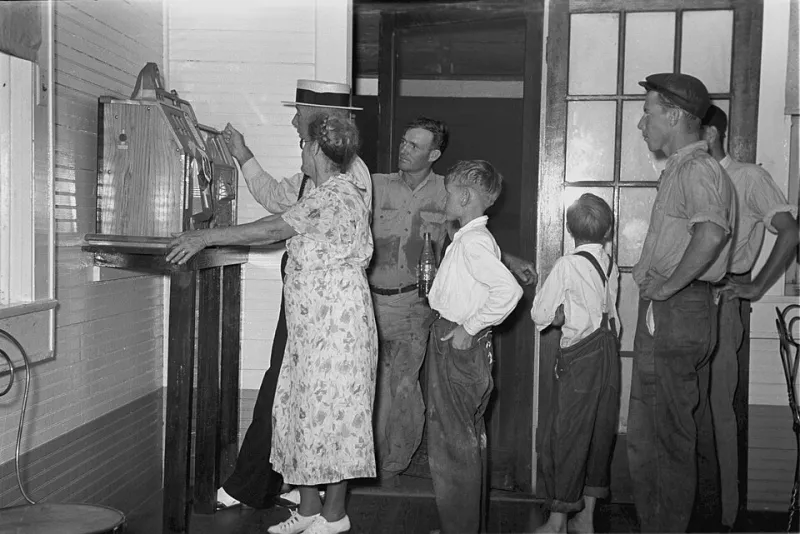
Photo: DrRohithgurugubelli, CC BY-SA 4.0, via Wikimedia Commons
There's a particular kind of gambler most of us have been at some point. You sit down with $100 and a loose plan. An hour passes. Then two. The chips get low, so you pull out a little more — just to get back to even. Before you know it, it's midnight, you're down $240, and you're not even sure when the fun stopped.
Sound familiar? You're not alone, and more importantly, you're not weak-willed. That pattern is the predictable result of walking into a highly engineered environment without a real framework for how you want to spend your time and money there.
Here at Cocoa Casino, we've been thinking about this a lot — and we think the answer isn't willpower. It's structure. Specifically, the kind of intentional, pre-planned structure that the best casual gamblers use to stay in control without sucking all the joy out of the experience.
We're calling it the tasting menu approach. And once you try it, the "one more spin" marathon starts to look a lot less appealing.
Why the Marathon Model Fails Almost Everyone
Open-ended casino sessions have a fundamental design flaw: they have no natural stopping point. Unlike a dinner reservation or a concert, there's no external signal that the experience is wrapping up. The casino, obviously, has every incentive to keep you there as long as possible — the longer you play, the more the house edge works in their favor.
Behavioral economists call this "session creep." Your original budget stretches. Your loss threshold moves. What started as "I'll stop when I'm down $50" quietly becomes "I'll stop when I get back to even" — which is exactly the kind of thinking that fuels problem gambling patterns.
Mark, a 41-year-old from Phoenix who plays blackjack recreationally about twice a month, described it this way: "I used to go in with $150 and tell myself I'd leave happy with anything over $100. But the second I started losing, the whole plan went out the window. I'd be there four hours later, completely exhausted, having spent way more than I planned. And the weird part? I wasn't even having fun by the end."
Mark's experience is practically universal among casual players. The marathon model sounds reasonable in theory. In practice, it collapses under the emotional pressure of actual gameplay.
What the Tasting Menu Approach Actually Looks Like
A tasting menu at a great restaurant doesn't give you unlimited food — it gives you a carefully curated set of experiences, each one distinct, none of them overwhelming. You leave satisfied rather than stuffed. The constraint is the point.
Applying that philosophy to casino gaming means making three specific decisions before you ever walk through the door:
1. Set a hard time limit — and treat it like a dinner reservation. Decide exactly how long your session will be. Ninety minutes. Two hours. Whatever fits your evening. Set an alarm on your phone. When it goes off, you cash out, regardless of where your balance stands. No extensions.
This sounds brutally simple, and it is. But it completely changes your relationship with the session. Instead of chasing an outcome, you're savoring an experience with a known end point.
2. Divide your budget into "courses." If you're bringing $200, don't think of it as one $200 session. Break it into four $50 blocks, each dedicated to a different game or a defined stretch of time. Finish one "course" before moving to the next. This creates natural pause points where you check in with yourself — How am I feeling? Am I having fun? Do I want to continue?
Those check-ins are enormously powerful. They interrupt the trance-like state that open-ended sessions encourage.
3. Define what a "good session" looks like in advance — and make it about experience, not outcome. This is the hardest one for most people. We're conditioned to measure a casino visit by whether we won or lost. But that's a recipe for disappointment, because the house edge means you'll lose more often than you win over time.
Instead, define success as: I played the games I wanted to play, I stayed within my budget, and I left when I planned to. That's a win. Full stop.
Tanya, a 35-year-old from Chicago who visits casinos a few times a year, switched to this framework about eighteen months ago. "I started treating it like buying concert tickets," she told us. "I decide upfront what I'm paying for the experience. If I happen to come out ahead, awesome. But I'm not counting on it, and I'm not chasing it. Honestly? I enjoy the nights so much more now."
The Counterintuitive Math of Shorter Sessions
Here's something that surprises a lot of players: shorter sessions don't just feel better emotionally — they're actually better for your bankroll mathematically.
Every game in a casino has a house edge. That edge works against you over time, not necessarily in any single hand or spin. The more time you spend playing, the more opportunities the house edge has to grind down your stack. A two-hour session at a slot machine with a 4% house edge will, on average, cost you more than a one-hour session at the same machine — not because the odds changed, but because there were more rounds for the math to work.
This is called "time on device" in casino analytics, and operators know it intimately. Keeping you in your seat longer is literally how the business model works.
Shorter, capped sessions interrupt that process. You're essentially limiting the number of times the house edge can take a bite. You might still lose — variance is real — but you're giving yourself a fighting chance to leave while you're ahead, or at least while your losses are manageable.
Building the Habit: A Simple Pre-Session Framework
Good intentions don't survive contact with a casino floor without a plan. Here's a quick framework you can actually use:
- Before you leave the house: Write down your time limit, your total budget, and how you're dividing it. Literally write it down.
- At the casino: Set your phone alarm for your end time the moment you sit down.
- At each check-in point: Ask yourself the three questions — Am I having fun? Am I within budget? Do I want to keep going?
- When the alarm goes off: Cash out. No negotiation.
It helps to have a post-session ritual too — grab a coffee, take a walk, call a friend. Something that marks the clean end of the experience and makes the transition feel natural rather than abrupt.
The Real Payoff
The tasting menu approach won't turn you into a consistent winner — no strategy can do that against a house edge. What it will do is make your casino time genuinely enjoyable on your own terms, protect your bankroll from the slow bleed of marathon sessions, and leave you feeling good about how you spent your evening rather than wondering where it all went.
Sometimes the smartest play is knowing exactly when to walk away — and deciding that before the game even starts.